Interlock Cleaning & Sealing
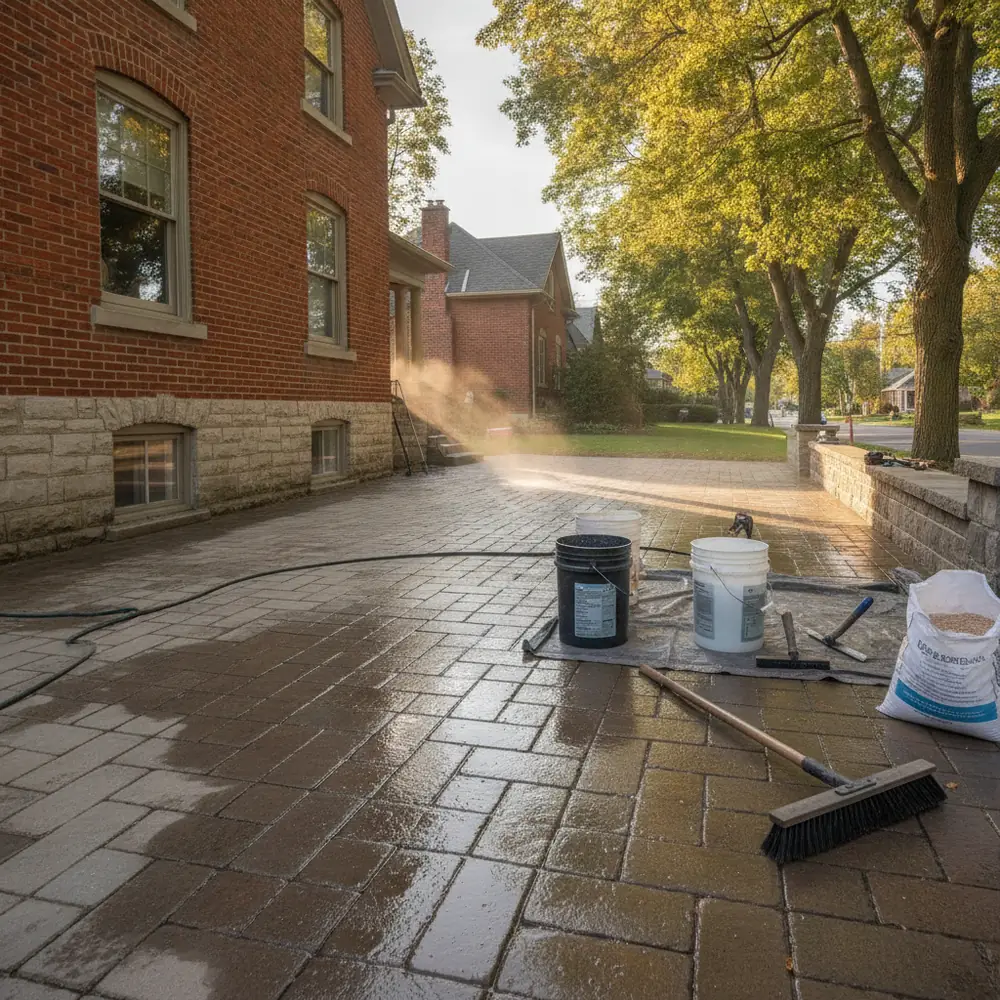
Pavers fade, stain and gather moss or algae over time — cleaning brings the original colour back, and a quality sealant afterward protects against future staining, efflorescence (that white chalky bloom), and freeze-thaw surface damage. Sealing also helps lock in fresh polymeric sand, so the two services are commonly done together.
Crews use a pressure wash or specialized paver cleaner appropriate to the stone (natural stone and coloured concrete pavers need different chemistry than plain grey concrete), then apply a breathable sealant that lets moisture escape rather than trapping it.
- Deep clean removes moss, algae and staining
- Breathable sealant — protects without trapping moisture
- Wet-look or natural-finish sealant options
- Commonly bundled with resanding for a full refresh
What it costs in Kitchener
- Cleaning only (per sq ft): $1–$2
- Cleaning + sealing (per sq ft): $3–$6
- Typical patio full refresh (clean + resand + seal): $1,200–$3,000 depending on size
- Natural stone pavers may run higher than standard concrete
Interlock Cleaning & Sealing FAQs
How long does sealant last?
Typically 2–4 years depending on sun exposure, foot/vehicle traffic and the sealant product used — crews will give you a realistic timeline for your specific job.
Will sealing make pavers slippery?
Quality sealants include a non-slip additive — this is worth confirming for pool decks or other wet-prone areas specifically.
Do you seal driveways too, not just patios?
Yes — interlock driveways benefit from sealing the same way patios do, often even more given vehicle traffic and oil exposure.
Should I clean and seal every year?
No — over-sealing can cause buildup issues. A 2–4 year cycle is typical; crews can assess if your pavers are due.